Intelligent document processing for a logistics company
Logistics
A road freight carrier was keying every bill of lading and CMR by hand before a pickup could be scheduled. We replaced that step with a model that reads the document and writes the shipment into the system they already use.
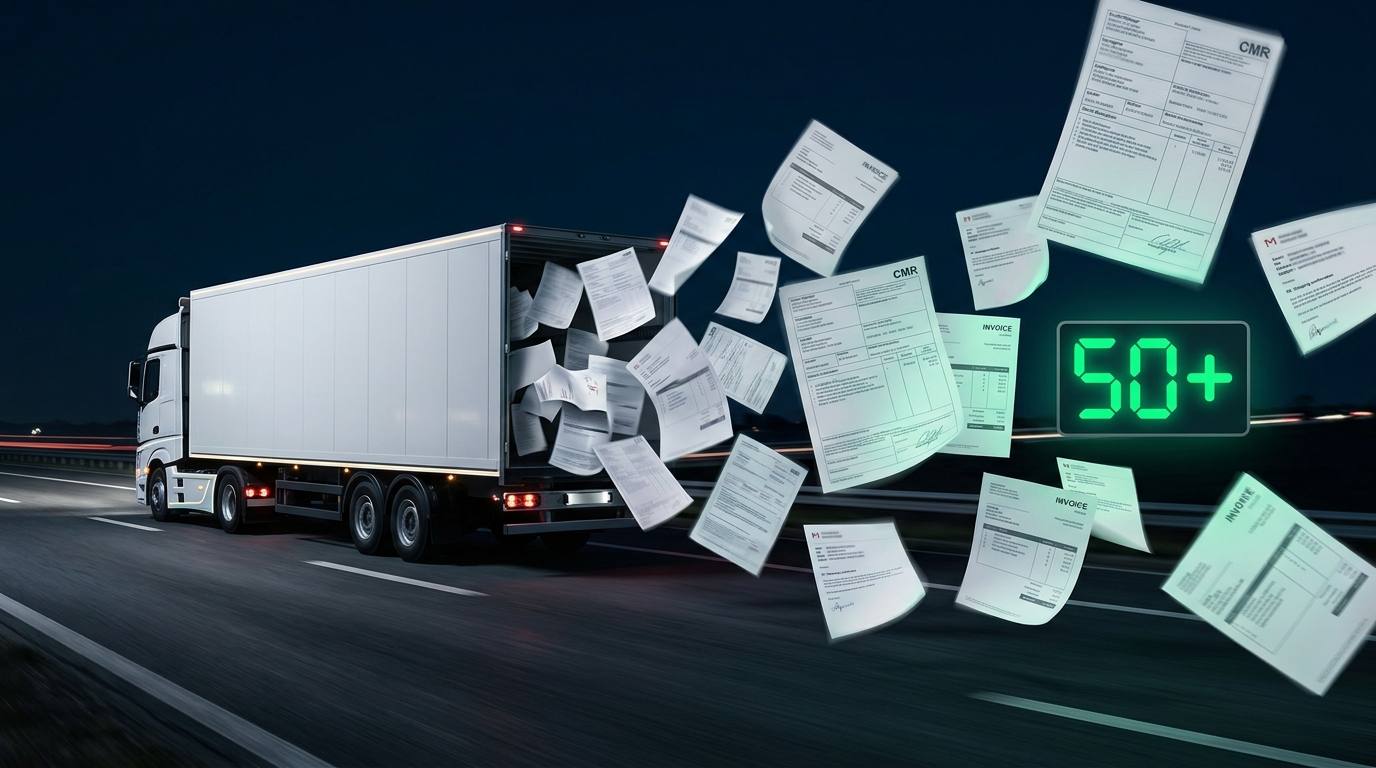
The problem
Nothing moved until someone read the paperwork. A bill of lading arrived as a PDF, a photo from a driver's phone, or a scan from a customer's own template, and an operator copied the fields into the transport system: consignor, consignee, pickup address, cargo, weight, reference numbers.
The same document looked different depending on who sent it. Fields moved, labels changed language, and stamps covered the numbers that mattered. A busy morning meant a queue of pickups waiting on data entry, and a mistyped reference meant a truck at the wrong dock.
What we built
The document lands in a mailbox or is uploaded, and the system takes it from there.
- Read whatever arrives. PDFs, scans and phone photos go through the same pipeline. The model was trained on the layouts this carrier actually receives, including CMR consignment notes and commercial invoices, not on a single template.
- Extract the fields that dispatch needs. Parties, addresses, cargo lines, weights and reference numbers come out as structured data, with a confidence score on each field.
- Hand the exceptions to a person. Anything below the threshold is flagged for review instead of being written silently. The operator corrects one field, not the whole document.
- Write it where the work happens. Confirmed data goes straight into the existing transport system, so pickup scheduling and tracking update without a second round of typing.
Because the model reads layout rather than matching a fixed template, a new customer's document format does not need a new integration. It needs a few labelled examples.
The result
Document handling stopped being the bottleneck in front of dispatch. Processing time dropped by 75%, and extracted data stayed above 98% accuracy because low-confidence fields never bypassed review. The team that used to retype paperwork now only checks the cases the system is unsure about.
"The data is in the system before anyone asks for it. We stopped losing the morning to paperwork."
— Operations lead, logistics company
The same pipeline covers adjacent document types, so adding a new layout is a training task rather than a development project.
Talk to us about your documents